Everyday Respect
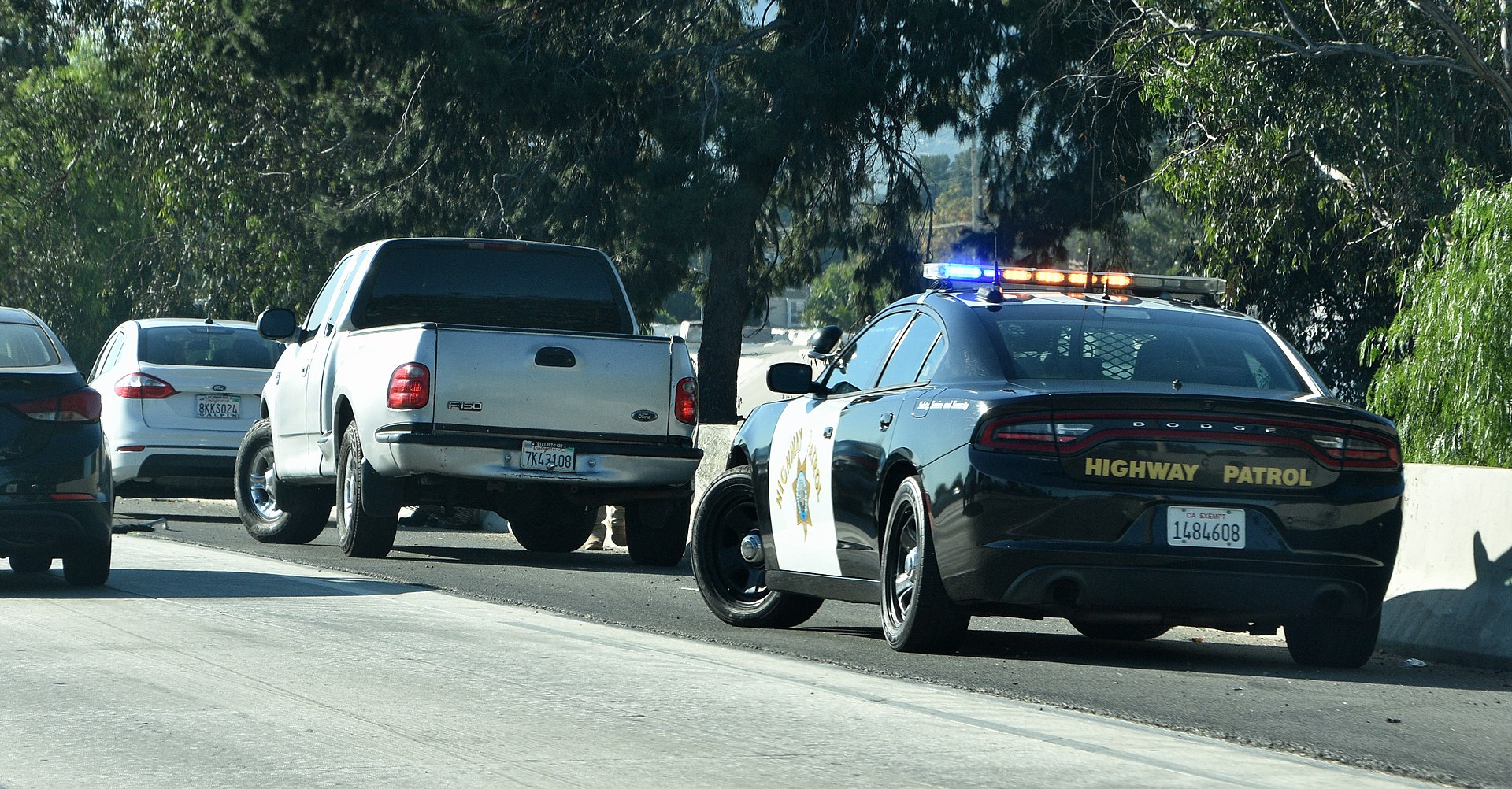
Everyday Respect is a collaboration of social scientists, engineers, and computer scientists to build community-informed AI models for analyzing police body-worn camera video. The research team includes researchers from the University of Texas at Austin, University of Southern California, University of California — Riverside, and Georgetown University.
Prior approaches assume there is a single, correct measure of a given interaction—a “ground truth.” Our approach assumes that different people can have different interpretations of the same interaction. We employ a diverse set of human annotators to view and score the content of body-worn camera (BWC) video from police traffic stops in Los Angeles. These human annotations are then used to train machine learning models to automate the review of BWC video at scale.
We will use these models to explore when and how police-public interactions result in effective and respectful interactions, when they lead to escalation, and how successful de-escalation occurs. These tools, including an open-source video annotation platform, will be released free and open-source to support open science, enhance transparency, and improve police-public communication across the U.S.
Papers
Golazizian, P., Rahmati, E., Trager, J., Sourati, Z., Ghazizadeh, N., Chochlakis, G., Alcocer, J., Bennett, K., Devnani, A. V., Hejabi, P., Muttram, H. G., Padte, A. K., Saadatinia, M., Wu, C., Ziabari, A. S., Sierra-Arévalo, M., Weller, N., Narayanan, S., Graham, B. A. T., & Dehghani, M. (Working Paper). The Subjectivity of Respect in Police Traffic Stops: Modeling Community Perspectives in Body-Worn Camera Footage.
Traffic stops are among the most frequent police-civilian interactions, and body-worn cameras (BWCs) provide a unique record of how these encounters unfold. Respect is a central dimension of these interactions, shaping public trust and perceived legitimacy, yet its interpretation is inherently subjective and shaped by lived experience, rendering community-specific perspectives a critical consideration. Leveraging unprecedented access to Los Angeles Police Department BWC footage, we introduce the first large-scale traffic-stop dataset annotated with respect ratings and free-text rationales from multiple perspectives. By sampling annotators from police-affiliated, justice-system-impacted, and non-affiliated Los Angeles residents, we enable the systematic study of perceptual differences across diverse communities. To this end, we (i) develop a domain-specific evaluation rubric grounded in procedural justice theory, LAPD training materials, and extensive fieldwork; (ii) introduce a rubric-driven preference data construction framework for perspective-consistent alignment; and (iii) propose a perspective-aware modeling framework that predicts personalized respect ratings and generates annotator-specific rationales for both officers and civilian drivers from traffic-stop transcripts. Across all three annotator groups, our approach improves both rating prediction performance and rationale alignment. Our perspective-aware framework enables law enforcement to better understand diverse community expectations, providing a vital tool for building public trust and procedural legitimacy.
Graham, B. A. T., Brown, L., Chochlakis, G., Dehghani, M., Delerme, R., Friedman, B., Graeden, E., Golazizian, P., Hebbar, R., Hejabi, P., Kommineni, A., Salinas, M., Sierra-Arévalo, M., Trager, J., Weller, N., & Narayanan, S. (Working Paper). A Multi-Perspective Machine Learning Approach to Evaluating Police-Driver Interaction in Los Angeles.
Interactions between the government officials and civilians affect public wellbeing and the state legitimacy that is necessary for the functioning of democratic society. Police officers, the most visible and contacted agents of the state, interact with the public more than 20 million times a year during traffic stops. Today, these interactions are regularly recorded by body-worn cameras (BWCs), which are lauded as a means to enhance police accountability and improve police-public interactions. However, the timely analysis of these recordings is hampered by a lack of reliable automated tools that can enable the analysis of these complex and contested police-public interactions. This article proposes an approach to developing new multi-perspective, multimodal machine learning (ML) tools to analyze the audio, video, and transcript information from this BWC footage. Our approach begins by identifying the aspects of communication most salient to different stakeholders, including both community members and police officers. We move away from modeling approaches built around the existence of a single ground truth and instead utilize new advances in soft labeling to incorporate variation in how different observers perceive the same interactions. We argue that this inclusive approach to the conceptualization and design of new ML tools is broadly applicable to the study of communication and development of analytic tools across domains of human interaction, including education, medicine, and the workplace.
Weller, N., Graham, B. A. T., Sierra-Arévalo, M., Brown, L., Alcocer, J., & Muttram, H. (Working Paper). Political Control and Policing: When Do Police Comply with Police Reform?
Police wield broad discretion. They are also agents of political principals who set policy that prescribes their behavior. We develop a model of police reform and argue that successful implementation requires that either (1) officers do not resist key policy elements or (2) principals are willing to sanction non-compliant officers. We test our theory using a 2022 Los Angeles Police Department reform regarding the practice of pretextual traffic stops. Drawing on body-worn camera footage and millions of stop records, we find that officers complied with the stop documentation reforms, which were not strongly opposed. In comparison, early reductions in pretextual stops dissipated within a year. Interviews with LAPD personnel support our model's predictions that noncompliance was driven by agent resistance and a lack of expected sanctions for policy violations.
Sierra-Arévalo, M., Alcocer, J., Brown, L., Delerme, R., Friedman, B., Graham, B. A. T., Muttram, H., Traeger, J., & Weller, N. (Working Paper). Police as Policymakers: How Experiences with Policy Implementation Shape Policy Representation.
Studies of political representation tend to focus on public preferences and either legislative policy or the actions of elected officials. Alignment between public opinion and de jure policy is a key element of democratic politics. However, policy implementation determines de facto policy as experienced by the public. We combine survey and interview data about preferences and experiences with police traffic stops in Los Angeles, CA. Survey results show little variation across racial groups' reported preferences and experiences with traffic stops. However, we observe considerable variation in views of police performance. Interview data indicate that despite similar preferences regarding police treatment, minority respondents' direct and vicarious experiences with police create fear and anxiety that affect their views on present day policing. Studies of representation therefore should take account of policy implementation to understand what may be superficial correspondence between preferences and written policy.